By Valerie Bravo
In the world of competitive sports, physical ability is only part of the recipe. Mental resilience, emotional support and strategies for overcoming mistakes play a crucial role in an athlete’s success. Three student-athletes at SHS shared their experiences on handling setbacks, staying motivated and managing the pressures of sports.
Kenadie Garloch, a 17-year-old junior, is a tri-sport athlete who competes in cheer, volleyball, and softball. She started playing T-ball at age 4 before progressing to softball and began cheerleading her sophomore year.
Braxton Dean, a 17-year-old junior, is a multisport athlete who plays football, basketball, and track. He started playing baseball and football at age 5 and began running track in eighth grade.
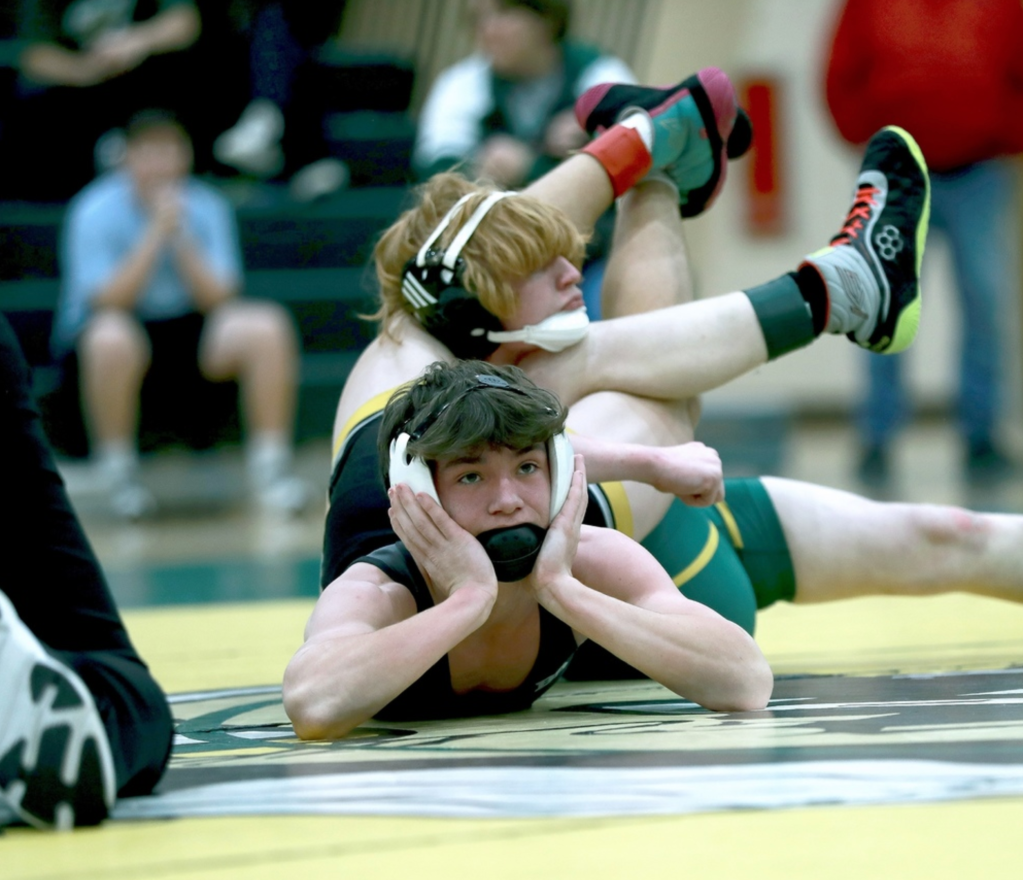
Dylan Walters, a 15-year-old freshman, competes in football, wrestling, and track. He has been wrestling for 10 years, playing football for seven years, and running track for two years.
Luke Baldwin, a 14-year-old freshman, is a three-sport athlete who participates in cross-country, basketball, and baseball. He has been playing baseball since he was 4, basketball since second grade, and started running cross-country in sixth grade.
Learning from Mistakes
For many athletes, mistakes can be a defining moment in their performance. Garloch, who follows a “three-second rule,” allows herself a moment of frustration before moving on.
“After each mistake, obviously I get upset with myself, but I always tell myself that I only have three seconds to be upset,” Garloch said. “I have to get over it and move on because each sport is mental, and if you are upset with yourself, then you will not play to your full potential.”
Walters takes a more analytical approach, reviewing films to correct mistakes.
“If I make a mistake that costs me a loss in the sport I’m doing, then I’m just gonna watch a film on the mistake I made and learn from it,” Walters said. “If it doesn’t cost me a loss, but it costs me something that I can still fix during the game or match, then I just tell myself I can’t do that again and fix it on the go.”
Baldwin shared similar thoughts, showing the importance of recovery.
“Making a mistake sucks. It really does. You feel like you hurt your team, but you have to keep your head up and move past it and make up for it,” Baldwin said.
The Power of Support Systems
Athletes often rely on strong support systems to stay motivated and perform at their best. For Garloch, her mother and sisters serve as her biggest influences.
“They all push me to my full potential, even when I don’t want to,” she said.
Walters finds comfort in knowing his coaches and family are always there for him.
“The relationships I have in my sport are just knowing I have people behind me like a family,” Walters said. “For wrestling, I have my coaches. My dad is one of the coaches, and my uncle is on the coaching staff, so I can go to all of them.”
Baldwin emphasized the importance of building strong relationships with teammates and coaches.
“The relationship you have with your coach is always a big one. Always respect your coach and do what is asked of you,” Baldwin said. “Making relationships with your teammates is by far the best. You learn together, have fun together, and play the sport you love together.”
Dean credits both his parents and his opponents for fueling his determination on the field. “Relationships that impact my sports would be my parents; my dad is always pushing me and tells me to be the best, my mom’s telling me I need to be stronger, and then people that I play against,” Dean said. “They both push me to be the best I can be.”
Reset Routines and Coping Mechanisms
Finding ways to reset and wind down after a tough moment is important for any athlete. Walters turns to a cold or hot shower to help him reset.
“Every night I always stretch and massage my upper and lower body using my foam roller or massage gun. Sometimes I’ll take ice baths the night before a game,” Dean explains that it is crucial and important to recover and reset.
“My rest routine every night is to stretch. It might seem like it’s not a lot, but if you’re an athlete, it’s definitely important. It gets your muscles ready and loose,” Baldwin said.
Garloch, on the other hand, doesn’t follow a specific reset routine but focuses on breathing exercises to regain composure after a mistake.
“I take a couple of deep breaths and tell myself that it is okay and I will get the next one,” she said.
Moving Forward After Tough Days
Bad days are bound to happen in sports, but how athletes handle them determines their results. When Garloch struggles, she turns to her mom for reassurance.
“She is always there for me and tells me that things are okay,” Garloch said. “When I am stressed about sports and am struggling, my mom always reminds me of my three-second rule and that it is okay to have bad days because that is how I will learn.”
Walters also seeks out support when needed.
“If I’m having a bad day, I’ll just go to my family if I really need help that bad, or I’ll just talk to one of my many coaches, knowing that they will be there for me,” Walter said.
Baldwin takes time to reflect and refocus.
“After a bad day, I’ll usually go to myself and think about it and just move on from it and hope I have a better one tomorrow,” Baldwin said. “After a bad game, I’ll go to my dad. He will always tell me what I need to correct, how to correct it, and what he saw during the game.”
Managing Stress and Balance
Student-athletes juggle a demanding schedule filled with practices, games, and academic responsibilities, making time management a crucial skill. According to Jennifer Martin, a counselor at Salem High School, learning how to balance commitments without becoming overwhelmed is key to reducing stress and anxiety.
“Having so many different things going on makes them be time managers, but also not get overwhelmed,” Martin said. “Save some time in your schedule to do something fun or relaxing, something that the student enjoys.”
Finding effective ways to manage stress varies from athlete to athlete. Some use deep breathing techniques, stretching to relieve muscle tension, or listening to pregame playlists.
“Encouragement is a big thing, whether it’s a high five, a slap on the back, or verbal encouragement,” Martin said. “If they need to be corrected on something, correct them, but also remind them of the good things they’re doing.”
Ultimately, student-athletes must remember that their well-being comes first. Martin stressed that seeking help, whether for physical or mental health, should never be seen as a weakness.
“If someone broke their leg, you’d expect them to get a cast,” Martin said. “If somebody needs professional help for their mental health, that should be looked upon the same way.”
The Bigger Picture
Athlete awareness goes beyond physical training—it’s about mental toughness, strong relationships and effective coping mechanisms. Whether through breathing techniques, reviewing film, or seeking support from loved ones, these athletes demonstrate the importance of staying mentally strong in the face of challenges. Their stories serve as a reminder that setbacks are temporary and growth comes from learning how to navigate them.
 Salem High School Media
Leave a comment